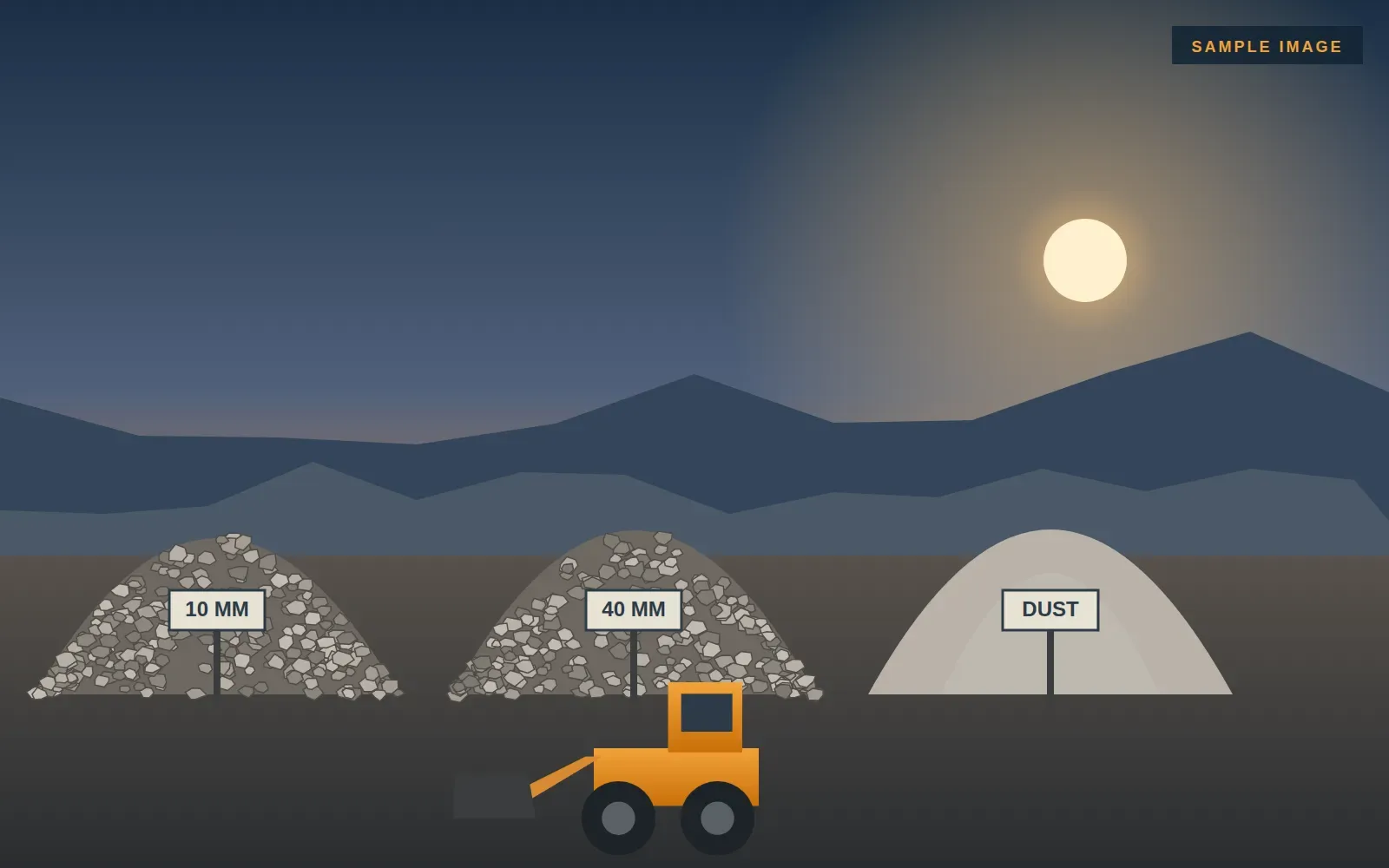
Stone aggregates are supplied in standard sizes. Here is a simple guide to what 10mm, 20mm and 40mm aggregates are and where each size is commonly used.
Crushed stone aggregates are graded by size after crushing and screening. Choosing the right size helps concrete, roads and other works perform as intended, and avoids paying for material that does not suit the job.
Common aggregate sizes
| Size | Typical uses |
|---|---|
| 10mm | Thin slabs, precast items, plaster-free finishes and mixes that need a smooth surface |
| 20mm | General reinforced concrete: slabs, beams, columns and footings |
| 40mm | Mass concrete, foundations, bases and road work where larger stone is acceptable |
Why grading matters
A good mix of sizes fills the gaps between stones, so less cement paste is needed to bind them together. Poorly graded or single-size material leaves more voids, which can reduce strength and increase cement consumption.
Quick checks before ordering
- Confirm the size mentioned in your drawings or by your engineer.
- Ask for clean material, free from excess dust, clay and organic matter.
- Plan the quantity with some allowance for wastage and levelling.
If you are unsure which size suits your work, share the details of your project with your supplier and engineer before placing the order.